

A bath that leaves your pet itchier than before usually points to the products and the process, not the bath itself. Harsh or heavily fragranced shampoos strip the skin’s natural oils, water that runs too hot inflames tender skin, and leftover suds from a rushed rinse keep irritating a dog or cat long after the bath is over. Sensitive skin does best with the right ingredients, a long, thorough rinse, and a consistent routine matched to how often the skin actually needs washing. Get those pieces right and bath time can calm the skin down instead of firing it up.
Animal Hospital Southwest keeps grooming for dogs and cats in Fort Worth under the same roof as our veterinary team, which means medicated baths happen with a veterinarian steps away instead of across town. That matters most when a medicated shampoo needs a full ten minutes of contact time, and you’re the one pinning seventy pounds of sudsy, deeply offended dog in the tub while the clock crawls and they plot their soapy sprint down the hallway. Hand us that job. And if your pet keeps flaring no matter which bottle you buy, we can examine the skin, figure out why it’s so reactive in the first place, and match the products to the actual problem. Book an appointment and let’s make bath day merely dramatic instead of genuinely miserable.
The Short, Sudsy Version
- Sensitive skin usually traces back to allergies, parasites, an underlying condition, or an ingredient in something touching the skin, so identifying the cause comes before picking a shampoo.
- Ingredients matter more than brands: colloidal oatmeal, pramoxine, and Ophytrium soothe, chlorhexidine and miconazole fight infection, and omega fatty acids rebuild the barrier from inside.
- Several popular home remedies backfire, including apple cider vinegar, essential oils, and coconut oil, and human shampoos sit at the wrong pH for pets entirely.
- Between baths, wipes, sprays, and mousses keep paws, facial folds, and itchy spots calm, and our grooming team can handle the medicated baths your pet’s skin plan calls for.
How Do I Know My Pet Has Sensitive Skin?
Sensitive skin announces itself as an outsized reaction to ordinary things: a new shampoo, a walk through the grass, a switched laundry detergent. Watch for these signals:
- Itch that won’t quit: Persistent scratching, licking, or chewing, especially at paws, ears, or the tail base.
- Coat and skin changes: Flaky, greasy, or smelly skin, plus redness or inflamed patches.
- Thinning fur: Bald spots and patches that never fill back in are hair loss, not ordinary shedding, and usually signal a skin problem underneath.
- Ear trouble: Head-shaking, odor, or discharge that keeps coming back.
- Flares after contact: Redness on the belly, chin, or paws after lying on a freshly washed blanket or a newly cleaned floor.
What Actually Causes Sensitive Skin in Dogs and Cats?
Sensitive skin has two broad sources: a medical condition driving inflammation from the inside, or an ingredient in the pet’s world irritating it from the outside. Many pets have both at once, which is why the same itch can need two different fixes.
On the medical side, many flare-ups trace back to skin allergies, whether the trigger is pollen drifting through Fort Worth, something in the food bowl, or a flea bite. A single bite can set off flea allergy dermatitis, one of the most common skin diseases in dogs and cats. Hormonal conditions like low thyroid quietly change the coat, and breed genetics stack the deck for skin-fold and allergy-prone breeds.
On the ingredient side, contact dermatitis develops when the skin reacts to something it touches directly. Fragranced shampoos, fabric softeners on your towels, and grooming sprays can all cause a reaction, landing on the least-furred spots like the belly, chin, and paws.
| Trigger | What it often looks like |
| Environmental allergens (pollen, dust, mold) | Seasonal itching, ear infections, paw licking, face rubbing |
| Food sensitivities | Year-round itch, recurring ear flare-ups, tummy upset |
| Fleas and other parasites | Chewing at the tail base, scabs, thinning fur |
| Underlying conditions (thyroid, hormones) | Symmetrical hair loss, dull coat, weight changes |
| Contact irritants (detergents, cleaners, fragrances) | Rash on belly, chin, and paws after contact |
| Breed and genetics | Rashes in folds, greasy or flaky skin |
What Does the Workup for Sensitive Skin Involve?
The workup is how we stop guessing. A skin exam plus a few targeted tests separates an allergy from a parasite problem, a hormone imbalance, or a contact reaction, and each of those needs a different plan. Buying a fifth shampoo before the diagnosis is how bathroom cabinets fill up with barely-used bottles.
The usual steps are simple and quick. Skin cytology and scrapes read what’s living on the surface, showing whether yeast, bacteria, or mites are part of the picture. Bloodwork through our in-house diagnostics checks thyroid and organ function. For ears that keep flaring, video otoscopy lets us see the whole canal instead of just the opening. When food is the suspect, an elimination diet trial confirms it. Our veterinary team works through that list with you as a partner, and our AAHA accreditation holds the whole workup to a consistent standard.
Which Ingredients Actually Help Sensitive Skin?
The label matters more than the brand. A handful of ingredients do the real work in sensitive-skin products, and knowing what each one does turns the pet-store wall of bottles into a short, sensible list. Some ingredients are only available in prescription shampoos, and our team can direct you to the right product.
| Ingredient | What it does | Where you’ll find it |
| Colloidal oatmeal | Soothes and calms dry, itchy skin | Maintenance and moisturizing shampoos |
| Ceramides | Rebuild the skin barrier and hold moisture in | Shampoos, conditioners, spot-on barrier products |
| Pramoxine | Gently numbs the itch at the surface | Anti-itch shampoos and leave-on sprays |
| Hydrocortisone | Calms localized inflammation short-term | Sprays and creams, best used with vet guidance |
| Ophytrium | Soothes skin and supports its natural defenses | Newer shampoos and mousses |
| Chlorhexidine and miconazole | Kill the bacteria and yeast behind infections | Medicated shampoos and wipes |
| Benzoyl peroxide | Deep-cleans oily skin and flushes clogged follicles | Vet-directed shampoos for greasy or infected skin |
| Omega fatty acids | Strengthen the barrier from the inside out | Shampoos for dry, flaky skin |
The soothing group is fair game for most itchy pets, while the medicated group works best with a diagnosis behind it, since chlorhexidine does nothing for a pet whose real problem is yeast alone, and benzoyl peroxide can over-dry skin that didn’t need degreasing. We stock the products we actually trust through our online pharmacy, and we’re happy to point you to the right bottle instead of leaving you to squint at labels.
Which Products and Home Remedies Make Sensitive Skin Worse?
Some of the most tempting fixes are the ones that backfire, and a few show up in our exam rooms over and over:
- Human and baby shampoo: Human skin is more acidic than a dog’s or cat’s, so even gentle people-products disrupt the pet skin barrier and strip the oils sensitive skin can least afford to lose.
- Essential oils: Tea tree, eucalyptus, and similar oils are irritating at best and toxic at worst, especially for cats, and “natural” on the label doesn’t change that.
- Apple cider vinegar: The internet loves it, but it’s an acid. On inflamed or broken skin it stings, dries, and makes an itchy pet more miserable.
- Old-school flea shampoos: Harsh on sensitive skin and largely obsolete, since modern monthly preventives control fleas better without scouring the coat in the process.
- Coconut oil: Moisturizing in theory, but pets lick it right off, which trades a greasy coat for an upset stomach and diarrhea. There are better barriers.
If a product stings going on or your pet seems worse the next day, stop, rinse with plain lukewarm water, and ask us what to use instead.
What Does a Good Bathing Routine Look Like for Sensitive Skin?
A good bathing routine is mostly about slowing down. Brush first so water can reach the skin, use lukewarm (never hot) water, and work the shampoo in gently. Give medicated formulas their full contact time, usually ten minutes, before rinsing twice as long as feels necessary. Keep the mood calm and treat-heavy, and pat dry rather than scrubbing. For pets with heavy facial folds and tail folds, be sure to dry all the nooks and crannies; skin folds left damp turn into skin infections.
Frequency is the other half. Many sensitive-skin dogs do well every one to four weeks, most cats rarely need a full bath unless a medicated plan calls for one, and a vet-prescribed schedule outranks both. Watch the skin after each bath: more itching or flaking usually means you’re washing too often or using the wrong product. The most common mistakes are the well-meant ones: over-bathing, hot water, and a rushed rinse that leaves residue irritating the skin long after the fur has dried.
What Helps Between Baths?
Between baths is where sensitive-skin care is really won, because allergens and moisture build up daily while the tub only comes out weekly at most. Spot products fill that gap, and they’re especially valuable for brachycephalic breeds with deep facial folds and for allergic pets whose paws collect pollen on every walk:
- Wipes: A quick pass over the paws and between the toes after outdoor time clears pollen and grit before it gets licked off, and a daily wipe-and-dry of facial folds keeps yeast from setting up in the warm creases of a Bulldog or Frenchie face.
- Sprays: Leave-on formulas with pramoxine or hydrocortisone calm a hot, itchy spot the moment it appears, no tub required.
- Mousses: A no-rinse lather for itchy patches, in-between freshening, and pets (looking at you, cats) who consider the bathtub a betrayal.
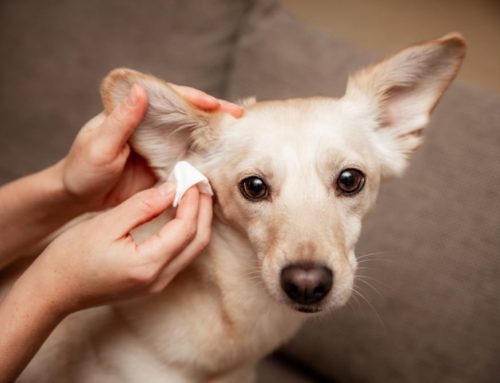
- Ear cleaning: Allergic pets are prone to ear infections, so regular cleaning with a vet-approved solution protects the skin’s most troublesome real estate.
- Brushing: Regular brushing spreads natural oils and keeps mats from trapping moisture and bacteria against the skin, where irritation loves to start.
Keeping nails short belongs on this list too, since routine nail trimming means less skin damage every time your pet scratches an itch.
Can the Groomer Just Handle All of This?
Mostly, yes, and that’s the point of having grooming inside a veterinary hospital. Our groomers bathe sensitive-skin pets with the shampoo your veterinarian actually prescribed, honor the full contact time most home baths cut short, and fold in ear cleaning and nail trims so the whole maintenance routine happens in one visit.
The same-roof setup does one more thing a standalone salon can’t: if the groomer spots a rash, a lump, or an ear that smells wrong, a veterinarian is nearby. Regular grooming already doubles as a health check, and mats that have tightened down to the skin are far safer shaved out by professional grooming than pulled at home. For pets on a medicated bath schedule, we can set a standing rhythm so the plan actually happens, which, let’s be honest, is the hardest part of any skin-care routine.

Frequently Asked Questions About Sensitive-Skin Care
How often should I bathe a dog or cat with sensitive skin?
It depends on the coat and the diagnosis, but many sensitive-skin dogs do well with a bath every one to four weeks, while most cats rarely need a full bath unless a medicated plan calls for it. Medicated shampoos often follow a schedule your veterinarian sets; maintenance washes are more flexible. Watch the skin after each bath, since more itch or flaking usually means you’re washing too often or using the wrong product.
Can I use human or baby shampoo on my pet in a pinch?
It’s better to skip it. Human skin is more acidic than a dog’s or cat’s, so shampoos built for people, including gentle baby formulas, can throw off the skin’s pH and strip the protective oils sensitive skin can least afford to lose. Keep a plain, pet-formulated, fragrance-free shampoo on hand instead, and if you’re truly stuck, plain lukewarm water is kinder than the wrong soap.
My pet’s skin flared right after I switched shampoos. Is that normal?
A little short-lived redness can happen as the skin adjusts, but a true flare with fresh itching, bumps, or hair loss is worth attention. It may signal a reaction to an ingredient, a wash that was too harsh, or a rinse that left residue behind. Stop the new product, rinse well with lukewarm water, and give the skin a few days. If it doesn’t settle, let us take a look before it turns into a secondary infection.
Do wipes and mousses actually work, or are they just for freshening up?
The medicated ones genuinely work. A chlorhexidine wipe delivers real antimicrobial treatment to a fold or paw, and a pramoxine mousse calms itch without a drop of water. The freshening products are a different aisle: pleasant, but not treatment. Check the active ingredients, or bring the container to your next visit and we’ll tell you which category you’re holding.
Bath Day Doesn’t Have to Be a Battle
Sensitive skin rewards patience and a plan more than any single miracle product. Find the cause, match the ingredients to the problem, keep up the between-bath habits, and most flare-ups lose their grip. When the itch keeps winning anyway, reach out and the Animal Hospital Southwest team can examine the skin, pin down the cause, and build a bathing and grooming routine that fits your dog or cat. Or skip straight to scheduling a visit at our Fort Worth hospital, and we’ll take it from there.





Leave A Comment