

Getting Portion Sizes Right: Using Calorie Calculators Correctly
You measure out what looks like a reasonable amount of food, toss in a few treats throughout the day, and maybe slip your dog a bite of cheese when those big eyes stare up at you. It all seems harmless enough. But then you notice your cat’s belly hanging a little lower, or your dog seems winded after a short walk, and you start wondering: am I feeding too much?
If that sounds familiar, you’re definitely not alone. Studies suggest that over half of dogs and cats in the United States are overweight or obese, and most of the time, it comes down to portion sizes that are just a bit too generous- plus all those “little” extras that add up faster than we realize.
At Animal Hospital Southwest in Fort Worth, weight management is built into our preventative care approach because maintaining a healthy weight is one of the most impactful things you can do for your pet’s long-term health. If you’re not sure where your pet stands or want help creating a plan that works for your household, book an appointment and we’ll figure it out together.
Why Does Calorie Counting Matter For Pets?
Here’s something that surprises a lot of pet owners: every cup of kibble or spoonful of wet food contains far more energy than it looks like. A pet that receives just 20 to 30 percent more calories than they burn will gain weight steadily over time- even if meal portions look small.
But calories aren’t the whole story. Two diets might contain the same number of calories but vary widely in protein, fat, fiber, and overall nutritional quality. Higher-protein foods help preserve lean muscle. Balanced fats support skin and coat health. Fiber helps keep pets satisfied between meals so they’re not staring at you an hour after dinner. Calories fuel the body, but nutrients shape health, mobility, and how well your pet ages.
Understanding how much to feed your pet requires both accurate calorie calculations and an honest look at their individual needs- their age, activity level, any health concerns, and yes, their treat habits too.
How Does Body Condition Scoring Work?
The number on the scale only tells part of the story. Two pets can weigh exactly the same and have completely different body compositions. A muscular, athletic dog might weigh more than a soft, sedentary dog of the same size- and still be much healthier. Muscle is denser than fat, so a lean, strong pet can actually be heavier than a fluffier, less fit pet.
That’s why veterinarians use Body Condition Scoring (BCS) alongside the scale. Body condition scoring is a hands-on assessment that looks at fat distribution and muscle mass to give a clearer picture of whether your pet is truly at a healthy weight. The good news? You can learn to do it at home.
Here’s how to check:
- From above: Look down at your pet while they stand. You should see a clear waist that narrows behind the ribs.
- From the side: The belly should tuck up toward the hips, not hang level with or below the chest.
- By touch: Run your hands along the ribcage with light pressure. You should feel each rib without pressing hard.
What the scores mean:
| Score | Category | What You’ll Find |
| 1-3 | Underweight | Ribs, spine, and hips visible; no fat covering; obvious tuck |
| 4-5 | Ideal | Ribs easy to feel with light pressure; noticeable waist; gentle tuck |
| 6-7 | Overweight | Ribs harder to feel; waist faint or missing; fat pads appearing |
| 8-9 | Obese | Ribs cannot be felt; no waist; round belly; obvious fat deposits |
Try checking monthly, especially if your pet has a fluffy coat that hides changes. If you’re not sure where your pet falls, contact us and we can walk you through the technique during your next visit.
How to Use Calorie Calculators Correctly
Online calorie calculators can be helpful, but think of them as a starting point rather than a final answer. What they can’t do is interpret your pet’s actual lifestyle, account for health conditions, or evaluate nutritional balance. That’s where professional guidance makes a real difference.
To use calculators effectively:
- Start with a reputable pet calorie calculator. The calculator from the Pet Nutrition Alliance is great. Before you begin, you need to know your pet’s current weight, their body condition score, and the number of calories per cup of their current food. If you are changing foods, find out how many calories per cup there are in it, too. This calculator will tell you how much food to feed, with or without a treat allotment.
- Reevaluate every few weeks based on how your pet looks, their appetite, and their activity level.
Keep in mind that calorie needs shift with seasons, exercise levels, age, and health status. A calculator can’t track those changes, but your veterinary team can. Partnering with professionals who understand obesity prevention strategies ensures that calorie targets get adjusted as your pet’s metabolism and activity levels evolve. During preventative care visits, we help translate calorie numbers into real-world food choices, feeding schedules, and treat allowances that actually reflect your pet’s daily life.
The Hidden Calories That Quietly Derail Feeding Plans
This is where things get tricky. Even the most carefully measured meal plan can fall apart because of treats and extras.
Consider this: a single small Milk-Bone contains about 30 calories. A large one? Around 120 calories. That popular 6-inch bully stick your dog loves can pack 80 to 100 calories, and a large 12-inch stick might contain as much as 250 calories. A tablespoon of peanut butter- often used to stuff Kongs or hide pills- can be up to 100 calories all by itself.
For a ten-pound dog, a single 100-calorie treat is roughly equivalent to a person eating a fast-food burger. Hand out a few of those throughout the day, and you’ve quickly overwhelmed even a perfectly calculated feeding plan.
Common sources of hidden calories include:
- Training treats given in rapid succession
- Table scraps, even in tiny amounts
- Dental chews that contain more calories than a meal
- Shared snacks like cheese, deli meat, or peanut butter
- Multiple people in the household giving treats without realizing others already did
These calories absolutely count. They add up quickly and can easily equal half- or more- of a pet’s daily energy needs.
Smarter Treat Swaps That Still Make Your Pet Happy
Here’s something worth remembering: most pets don’t actually care whether a treat is expensive or fancy. What they care about is that it came from you. That moment of connection and reward matters far more than the treat itself- which means you can swap out high-calorie options for healthier alternatives without your pet feeling shortchanged.
Low-calorie treats your pet will still love:
- Baby carrot stick: 2 to 4 calories total. Cut it into four pieces for crunchy treats that are about 1 calorie or less each.
- Chunk of celery: Less than 1 calorie
- Single blueberry: Less than 1 calorie
- Quarter of an apple slice: Less than 1 calorie
- Half a green bean: Less than 1 calorie
- Egg white: About 17 calories total. Chop it into small pieces for a handful of 2 to 3 calorie treats that feel special.
Compare those to a large Milk-Bone at 120 calories or a bully stick at 250 calories, and you can see how easy it is to reward your pet generously without derailing their nutrition plan. The treats feel just as meaningful to your pet- they just won’t show up on the scale.
A Simple Trick That Makes Treat Management Easy
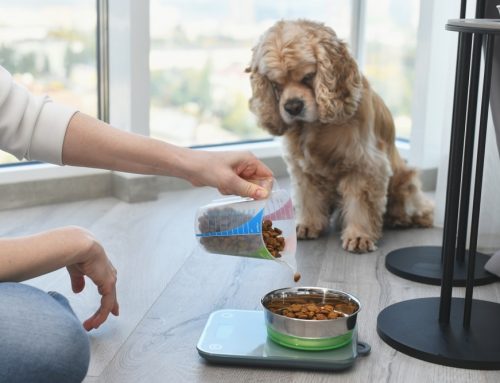
Here’s a practical strategy that takes the guesswork out of treats: measure your pet’s entire daily food portion in the morning and leave it in a cup or container on the counter. Throughout the day, whenever you want to reward your pet or they give you those irresistible “please?” eyes, reach into that cup and grab a few kibbles.
This approach works for a few reasons. First, you’re not adding extra calories on top of meals- every treat comes from the food they were already going to eat. Second, it gives everyone in the household a clear, visible limit. When the cup is empty, that’s it for the day. No more debates about whether the dog already got a treat or accidentally doubling up because two family members both snuck something from the pantry.
At the end of the day, whatever remains in the cup goes into the food bowl for dinner. Some families split it into two meals, portioning out breakfast and keeping the rest for treats and dinner. Either way, you end each day knowing your pet got exactly what they needed- no more, no less.
When Nutrition Needs a Medical Checkup
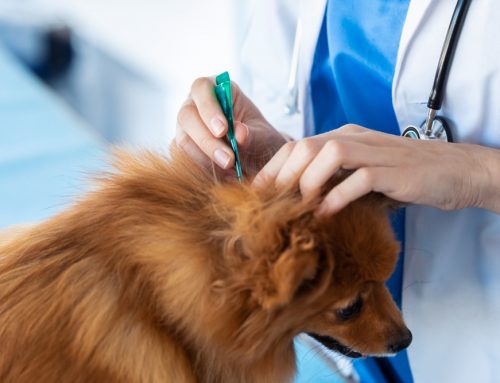
Before making major feeding changes, it’s important to rule out medical conditions that might be influencing your pet’s appetite or weight. Thyroid disorders, metabolic disease, chronic pain, dental discomfort, and digestive issues can all affect how pets eat and how their bodies process calories.
This is especially important for cats. Understanding safe weight loss for cats is crucial because losing weight too quickly can lead to hepatic lipidosis, a potentially life-threatening liver condition. Slow and steady is always the goal.
If arthritis is limiting your pet’s activity, we can incorporate pain management tools like Solensia for cats or Librela for dogs to make movement comfortable enough to support healthy metabolism. Nutrition and mobility work hand in hand, and we tailor both during appointments.
Poor nutrition quality can also raise the risk of conditions like diabetes mellitus, urinary stones, arthritis, IVDD, and systemic hypertension. And don’t forget about reduced heat tolerance- overweight pets have a harder time cooling down and face increased risk of heat stroke during Fort Worth’s hot summer months.
During preventative care visits, we review your pet’s food label with you and help select diets that match their health goals without unnecessary restriction. Our diagnostic capabilities allow us to evaluate underlying contributors and create a plan that prioritizes both health and comfort.
How We Help You Build a Sustainable Feeding Plan
Here’s the thing about nutrition plans: they need to evolve. Your pet’s needs will change with age, weather, activity level, and health status. Regular monitoring lets us catch subtle shifts before they become significant health concerns.
Our senior care programs include regular body condition checks so weight trends don’t sneak up on you. We recommend exams every six months for adult dogs and cats to catch changes early and adjust diet, portions, and activity targets as your pet’s life evolves.
Weight Loss Diets That Actually Work
Our pharmacy offers a variety of weight loss diets and low-calorie treats to help your pet successfully reach their goals.
Not all weight diets are created equal. Prescription weight-loss diets undergo feeding trials to prove they deliver safe, consistent fat loss while preserving lean muscle. They’re formulated with specific protein-to-calorie ratios, added L-carnitine for fat metabolism, and controlled fiber levels that help pets feel satisfied on fewer calories.
Rethinking Feeding Routines: Practical- and FUN- Strategies
For dogs, enrichment-based feeding can make a real difference. Puzzle feeders, slow bowls, or scatter feeding turn mealtime into mental stimulation, which improves satisfaction and reduces begging. Evidence-based strategies for weight loss in dogs emphasize gradual calorie reduction paired with increased activity and mental engagement.
For cats, food puzzles, small frequent meals, and opportunities for vertical movement align with their natural hunting instincts and help prevent overeating. A cat that “hunts” for their food tends to eat more slowly and feel more satisfied.
Ready to revisit feeding goals or see how your pet is responding to their current diet? Use our online system to book an appointment whenever it works for you.

Frequently Asked Questions
How fast should my pet lose weight?
Slow and steady wins this race. For most pets, small weekly losses add up over months to meaningful, lasting results. Rapid weight loss can be dangerous- especially for cats- so we set safe targets based on your pet’s starting point and overall health.
What if my pet refuses the new diet?
Transition gradually over seven to ten days, mixing increasing amounts of new food with decreasing amounts of old. A slow diet transition helps prevent digestive upset and food refusal. One important note: never try to starve a cat into eating a new food. If your cat refuses to eat for more than a day, call us for guidance.
Can treats stay in the plan?
Absolutely- just the right ones, and in moderation. Choose low-calorie options (remember those carrot pieces and blueberries!) and count them toward the daily total. You might also consider swapping some treat moments for play or praise instead. The attention is often what your pet really wants anyway.
Do I need prescription food?
They aren’t required, but they are extremely helpful. Prescription diets are specifically designed and tested for safe weight loss while protecting muscle mass. We can recommend the best fit based on your pet’s body condition, health status, and weight loss goals.
Ready to Improve Your Pet’s Nutrition?
Better body condition means easier movement, fewer health risks, and more happy, active years together. We know it can be hard to say no to a begging pet- those eyes are powerful- but small changes really do add up to big results. And you don’t have to figure it out alone.
As an AAHA-accredited hospital, Animal Hospital Southwest is committed to the highest standards of care. Our team is here to help you set realistic goals, choose the right food, and create a plan that fits your home and lifestyle.
Ready to get started? Contact us for a supportive evaluation, or book an appointment to create a weight management plan together. Your pet’s healthier, happier future starts with one small step.




Leave A Comment